Beyond the Classroom

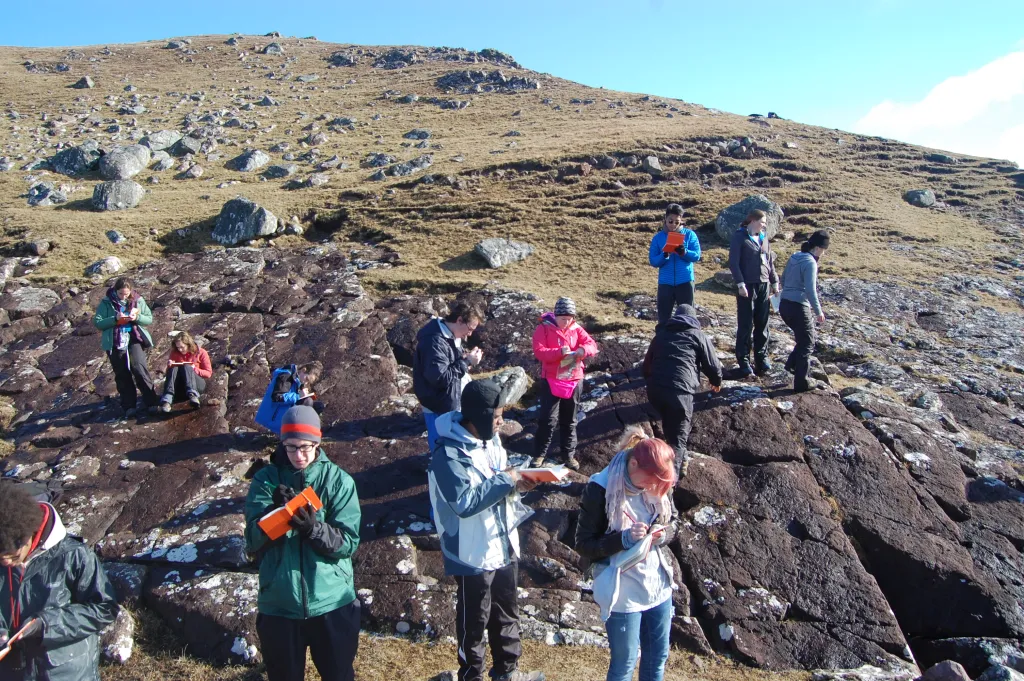
Students on rocks

Beyond the Classroom

Research Opportunities

Research is strongly encouraged as part of the undergraduate experience. It is a valuable opportunity to participate in cutting-edge studies and get a taste for what it means to contribute new knowledge to science. Research opportunities cover a wide range of topics, and may include field work or laboratory based research. Many undergraduates choose to complete senior theses as a capstone experience; some choose to do research throughout their four years at WashU. To get started, peruse our research page for a list of department labs and research groups. Most faculty have research opportunities for undergraduates in their lab, but you're invited to contact faculty with whom you've taken a course previously, and whose research you find exciting.

If you are interested in performing non-thesis research for credit, you have the option of signing up for EEPS 3900 Independent Study.

For rough guidance, here are some typical expectations:

Independent Study Experiences

  • 0.5 hours per week of one-on-one instruction plus a body of written work of at least 2500 words (or equivalent project work) for one unit.
  • 1.0 hours per week + 3750 words (or equivalent) for 2 units.
  • 1.5 hours per week + 5000 words (or equivalent) for 3 units.

Guided Research Experiences

  • Minimum two to three hours per week during standard semester is required for 1 unit.
  • Additional reading outside of research time expected.

Study Abroad Programs

Trinity College Dublin

This program offers a mixture of classroom field modules, through the Department of Geology. Students enrolled in this program during the spring semester participate in several international field trips around Europe. Destinations currently include trips to County Wexford in Ireland, the Almeria region of Spain, and the mainland and volcanic islands of Greece. For students enrolling in this program, it is recommended that they have completed courses in Introduction to Earth, Environmental, and Planetary Science (EEPS 2020), Petrology (EEPS 4374), Sedimentary Geology (EEPS 4224). Students enroll through IES Abroad Dublin, which arranges housing, student support, and cultural excursions around Ireland. This program does not fulfill the field camp requirement.

Learn More

University of Cape Town

This program offers classes in Geology and the opportunity to take a number of courses among different disciplines. This program does not fulfill the field camp requirement. For students enrolling in this program, it is recommended that they have completed Introduction to Earth, Environmental, and Planetary Science (EEPS 2020). A core component of the program in Cape Town is service learning. Students enroll through IES Abroad Cape Town.

Learn More

University of Edinburgh

This program offers courses in Earth Science and the opportunity to take a number of courses among different disciplines. This program does not fulfill the field camp requirement. For students enrolling in this program, it is recommended that they have completed Introduction to Earth, Environmental, and Planetary Science (EEPS 2020). Students enroll through Arcadia University.

Learn More

University of Queensland

This program offers courses in Earth Sciences and the opportunity to take a number of courses among different disciplines. This program does not fulfill the field camp requirement. For students enrolling in this program, it is recommended that they have completed Introduction to Earth, Environmental, and Planetary Science (EEPS 2020).

Learn More

Nanyang Technological University - Singapore

Explore a diverse range of learning experiences, including world-class pedagogy and thrilling student activities, all set on the expansive garden campus! Immerse yourself in the academic excellence of one of the world's leading universities, coupled with the excitement of a distinctly Asian adventure. International students from partner universities are invited to join our GEM Trailblazer Exchange program for a rewarding study exchange opportunity.

Learn More

University of Bern

The University of Bern (UniBe) offers students academic excellence, a rich student life, and a high standard of living in scenic Switzerland. With a rich history of pioneering scientific research, the University of Bern offers world-class coursework in fields like climate sciences, international trade, fundamental physics, and sustainable development. It was at the University of Bern where Albert Einstein received his physics professorship! Currently, UniBe has a student population of approximately 19,000 students, and about 12% are international students from around the world.

Learn More

University of Zurich

With more than 28,000 students, the University of Zurich (UZH) is Switzerland’s largest university. Founded in 1883, UZH was Europe’s first university to be established by a democratic political system. Internationally renowned for its excellent research and teaching, the University of Zurich offers excellent academics in areas like natural sciences, biology, communications, and political science. International students studying for a semester at UZH can expect to develop independent and critical thinking skills, learn to welcome unfamiliar ways of looking at the world, generate new ideas, and test new procedures.

Learn More

Study Abroad Questions?

We're here to help.

Contact Kun Wang

Get into the Field

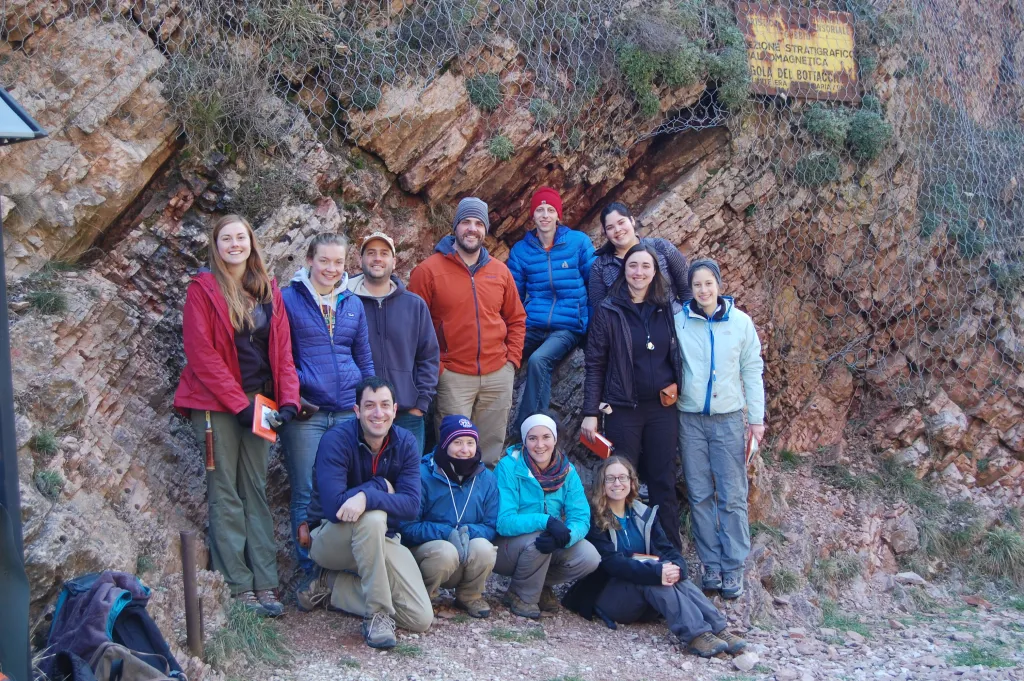
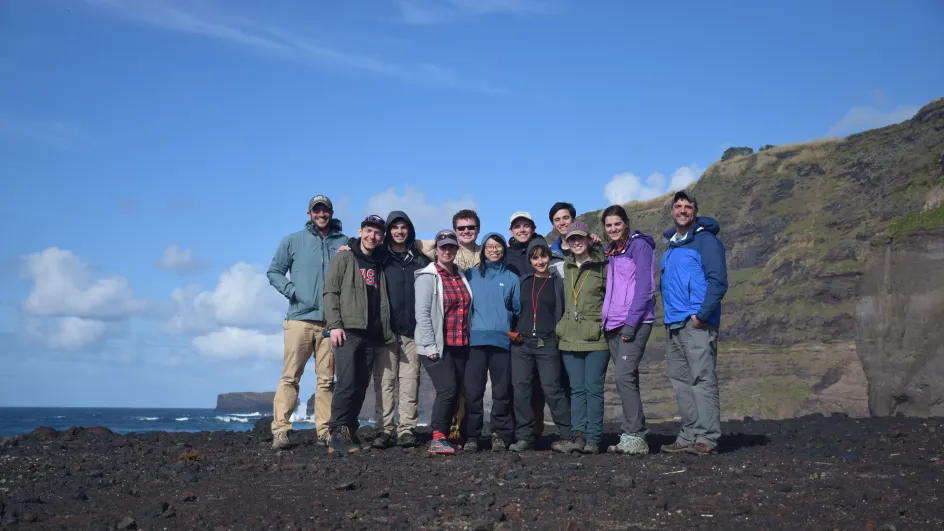
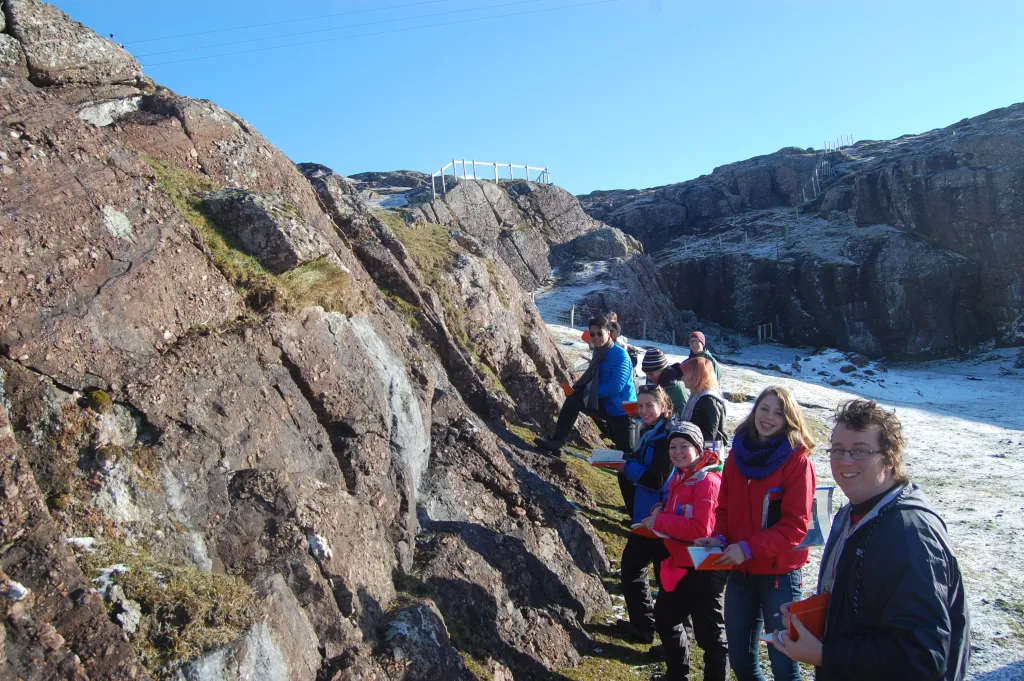
In EEPS at WashU, we believe that hands-on application of field-based techniques is integral to your education. Therefore, we offer EEPS 4960 Field Geology each spring to provide an opportunity for you to synthesize diverse classroom knowledge in a field setting. This course includes an international trip over spring break, which is paid for by the department. Recent trips went to such far-flung locales as Scotland, Italy, Spain, and the Azores off of Portugal. You can see photos from these trips in our photo gallery below.

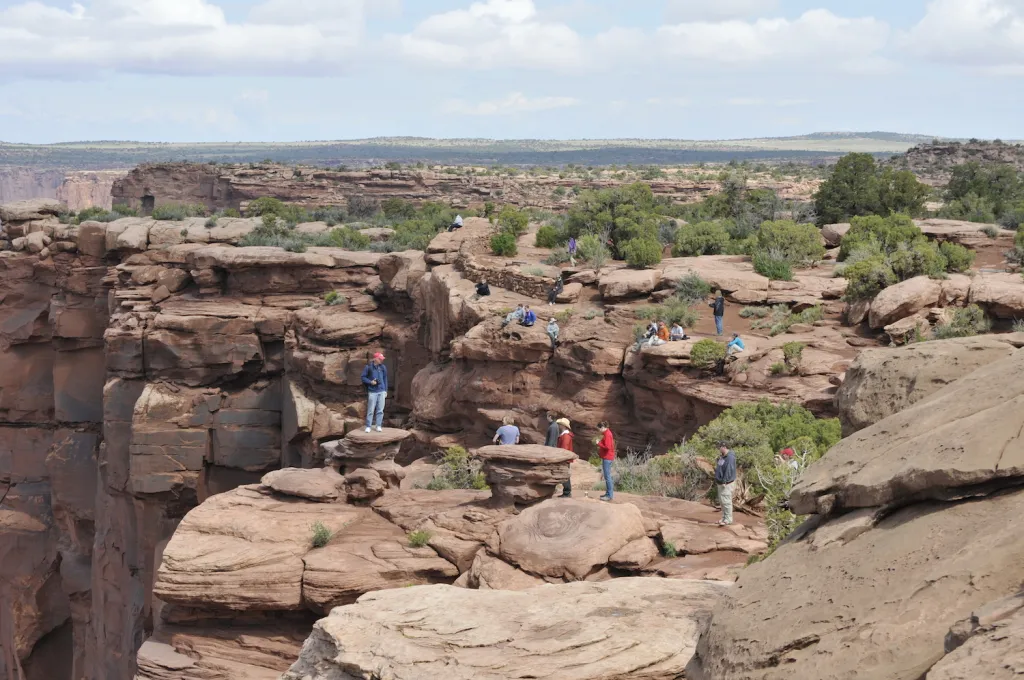
Group of students

Field Camp Opportunities

Typical field camp requirements

Most field courses recommend that applicants have completed courses in physical geology (such as EEPS 2020 Introduction to Earth, Environmental, and Planetary Sciences), historical geology (such as EEPS 3853 Earth History), mineralogy (such as EEPS 3520 Earth Materials), petrology (EEPS 4374), structural geology (EEPS 4604 and/or EEPS 4960 Field Geology), and sedimentology/stratigraphy (such as EEPS 4224 Sedimentary Geology). EEPS majors applying to field camp should have completed at least several of the classes on this list. 

Many programs begin accepting applications in the fall, so apply early. Typical expenses are in the range of $4000 to $5000, and these tend to cover tuition and fees, most lodging and meal costs, but not necessarily all.

All field camps must be approved by Professor Brad Jolliff prior to enrolling.

Some field camps popular with our majors:

University of Missouri, Branson Field Camp (very popular, fills up early in the fall)

Iowa State University Field Camp

Approval of Summer Field Camp Selection Form (PDF)